Learn more about the research opportunities in EWU’s Partners in Science Program
There are four research projects available for participating teachers in summer 2025 and summer 2026. Please review the projects before applying so you can indicate which project(s) you are most interested in.
Examining the effects of pesticides on honey bees (Apis mellifera) and their gut microbiome
Mentored by Dr. Jeni Walke
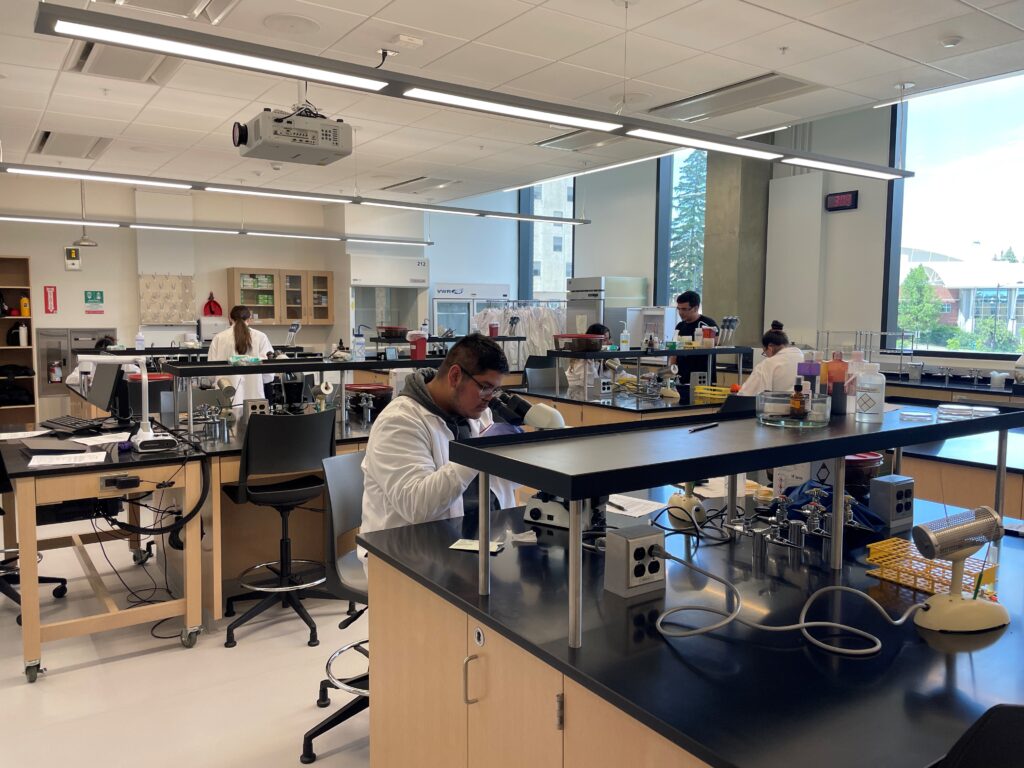
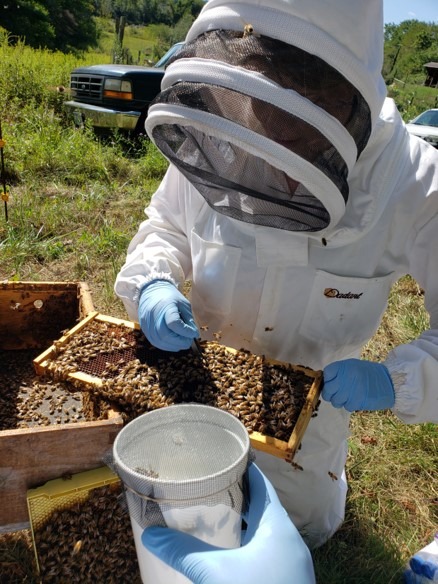
Honey bees (Apis mellifera) are important pollinators, but are experiencing substantial population losses, with severe environmental and economic consequences. A compelling approach to pollinator conservation lies in probiotic therapy, which is the use of microorganisms to confer a benefit to the host. Nearly all animals, including honey bees, are host to a collection of microbes that live in and on their bodies, namely, the microbiome, which can play important roles in development, immunity, metabolism, and even behavior. However, it is not known how environmental factors, such as pesticide exposures, influence the microbiome and thus host health. The proposed research project will evaluate whether pesticide exposure influences the diversity of the honeybee microbiome and will lay the foundation for probiotic development. This research project will provide teachers with a variety of research settings and approaches by merging 1) field work with local beekeepers, 2) laboratory work with cutting edge molecular, DNA-based methods, and 3) computational work with bioinformatics platforms.
Boron-Nitrogen Degradable Polymers
Mentored by Dr. Ashley Lamm
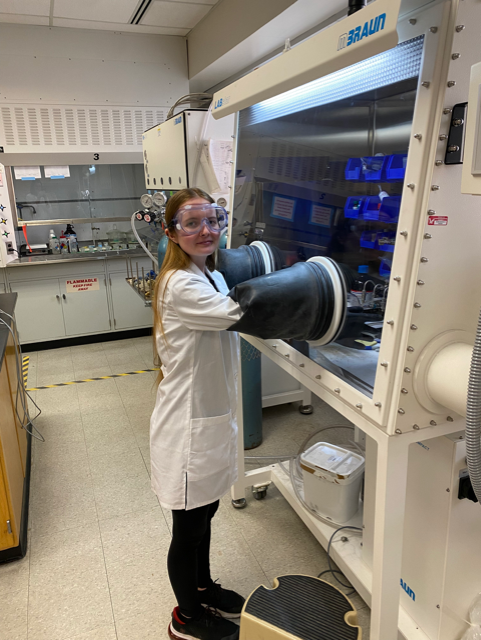
Many plastics that are used today have slow degradation rates, allowing them to persist in the environment and have a chronic potentially long-term adverse effect. In this project, a teacher will explore the development of novel boron-nitrogen (BN) polymers, which are hypothesized to exhibit a more rapid degradation rate compared to conventional plastic materials. We will synthesize and study novel BN-containing polymers, focusing on their synthesis, structure, electronic properties, and degradation kinetics to assess their viability in material applications.
Investigating the early stages of chemical weathering of rocks and minerals
Mentored by Dr. Carmen Nezat
Chemical weathering (dissolution and alteration) influences stream and soil chemistry, releases nutrients such as calcium and magnesium for plant uptake, and transforms landscapes over time. While chemical weathering has been studied extensively in the field and laboratory, the scarcity of geologically young rocks at the surface of the earth limits our understanding of weathering rates during the early evolution of landscapes. Volcanic deposits from the 1980 eruption of Mount St. Helens (MSH) provide a unique and extreme environment to study the early stage of chemical weathering rates and its relationship to the chemical composition of young streams.
Quantifying urban wildlife diversity in an Inland Northwest metropolitan area
Mentored by Dr. Charlotte Milling
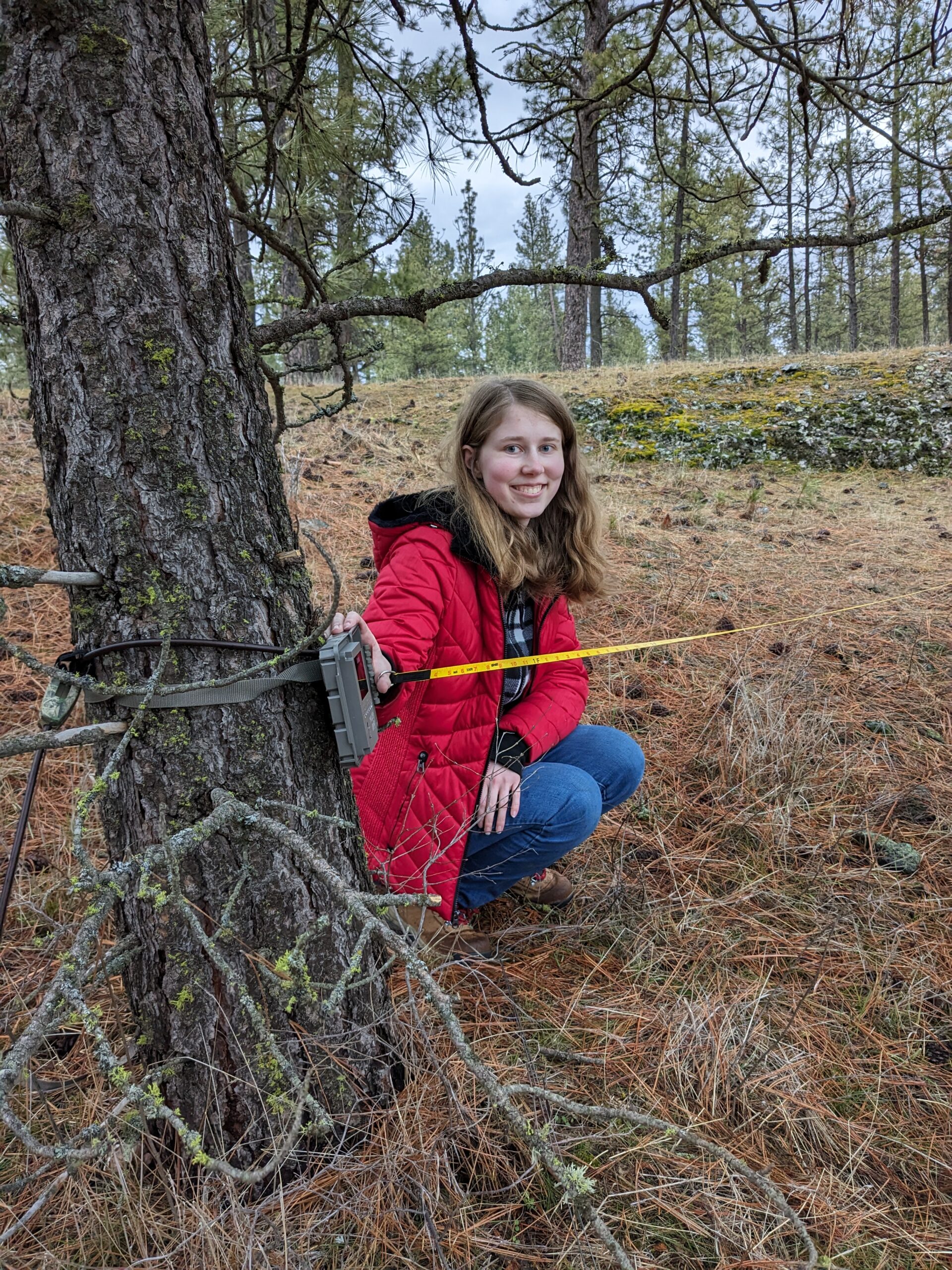
Despite popular perception, urban landscapes often host diverse communities of synanthropic wildlife. These landscapes might confer improved fitness to wildlife via reduced predation risk from large carnivores, prohibited hunting by humans, and provision of considerable food subsidies – both in the form of refuse and high densities of natural prey items. However, wildlife behavior and species diversity are often modified in urban spaces relative to suburban and rural landscapes. Given increasing urbanization and a growing appreciation of wildlife diversity in urban spaces, quantification and comparison of community composition within and among urban centers remains underexplored. Here, we propose adopting the framework of the Urban Wildlife Information Network (UWIN) to quantify wildlife community composition across an urban-rural gradient in Spokane, the second-largest city in Washington State. A mentor and teacher mentee will establish the research transect along the Spokane River (which bisects the city east to west) in coordination with Spokane City Parks, collect habitat measurements, and install trail cameras to capture images of wildlife for two 4-week periods in July. Mentees will code wildlife in the camera images captured and relate an index of biodiversity captured by the camera to a continuous measure of urbanization (i.e., percent built or building density).